Practical Insights from Field Installations and What EPCs Should Standardize Next
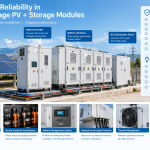
Small PV + storage modules—typically in the 5–30 kW PV range with 10–60 kWh storage—have become a practical solution for workshops, rural sites, telecom huts, small factories, commercial shops, and auxiliary industrial buildings.
While the concept seems simple, early deployments reveal a consistent set of engineering lessons that determine long-term performance and reliability.
This article summarizes replicable system design patterns, field-tested lessons, and actionable recommendations for EPCs and integrators.
1. Why Small PV + Storage Modules Are Growing Quickly
These systems are especially suitable for:
- Small workshops with unstable power
- Remote sites needing partial backup
- Tenants in commercial buildings
- Agricultural and cold storage units
- Remote offices and small industrial cabins
Customers want:
- Lower operational costs
- Partial backup for short outages
- No complex grid upgrade requirements
- Fast installation (1–3 days)
This creates a strong market for standardized modular systems with predictable installation requirements.
2. What Early Deployments Have Taught Us
Across dozens of early installations, several insights consistently emerge as determining system success.
Below are the key lessons that EPCs, distributors, and integrators should incorporate into future design templates.
Lesson 1 — Thermal Management Matters More Than Spec Sheets
Small systems are often installed in:
- Equipment rooms
- Metal outdoor boxes
- Small enclosures with no airflow
Even at 5–10 kW inverter capacity, temperature frequently becomes the first reliability challenge.
Field Findings
- Battery temperatures often reach 40–50°C during summer without airflow
- Inverter derating happens earlier than expected
- SOC estimation becomes inaccurate at high temperatures
- Cycle life drops when daily temperature swings exceed 10–15°C
Recommendation
- Use forced-air ventilation even for small 10 kW systems
- Keep battery compartments separate from inverter heat
- Install sunshades for outdoor cabinets
- Enforce thermal commissioning checks before handover
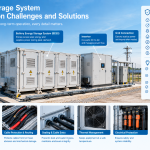
Lesson 2 — Cable Quality and Routing Define Long-Term Safety
Small systems have low voltage, meaning currents are higher, and poor cable work can become a hidden failure point.
Issues Observed in Early Deployments
- Overheated terminals
- Low-cost lugs oxidizing
- DC line voltage drop hitting 3–5%
- No labeling → maintenance confusion
Recommendation
- Use industrial-grade lugs and crimping
- Mandate <2% voltage drop from battery → inverter
- Label every DC connection
- Avoid cable bundling inside hot cabinets
Lesson 3 — Load Characterization Must Be Done Before Design
Many small installations use “estimated load lists” that do not reflect reality.
Observed Problems
- Motors causing unexpected surge currents
- HVAC start-up loads underestimated
- Mixed residential + commercial loads on the same circuit
- Load spikes leading to inverter trips
Recommendation
- Use three-day load logging before offering a solution
- Identify:
- Maximum instantaneous load
- Motor surge profile
- Seasonal variations
- Design inverter with 20–40% headroom
Lesson 4 — SOC Drift Happens When Systems Are Under-Cycled
Small PV + storage modules in good weather may sit at high SOC all day. This causes:
- SOC drift
- Balancing delays
- Premature BMS shutdown under load
Recommendation
- EMS rule: perform regular balancing cycles
- Maintain daily SOC movement between 20–90%
- Enable periodic calibration cycles
This increases battery accuracy and lifespan.
Lesson 5 — Customer Expectations Must Be Managed from Day 1
Many owners misunderstand what small PV + storage systems can (and cannot) do.
Common Misalignments
- Expecting full-building backup
- Expecting air conditioners to run during outages
- Believing system will eliminate all grid issues
- Assuming solar will run at maximum capacity all year
Effective Communication Approach
- Define a protected load panel
- Explain backup duration under various loads
- Provide simple dashboards showing:
- Daily PV production
- Battery SOC
- Load consumption
Clear communication prevents disputes and improves customer satisfaction.
6. A Real Deployment Example (12 kW + 28 kWh)
Site:
Small mechanical workshop on unreliable grid.
Issues Before Installation:
- 4–8 outages per week
- Voltage drops during afternoon peaks
- Lost production due to machine resets
System Installed:
- 12 kW PV
- 28 kWh modular LFP storage
- Hybrid inverter with load-priority control
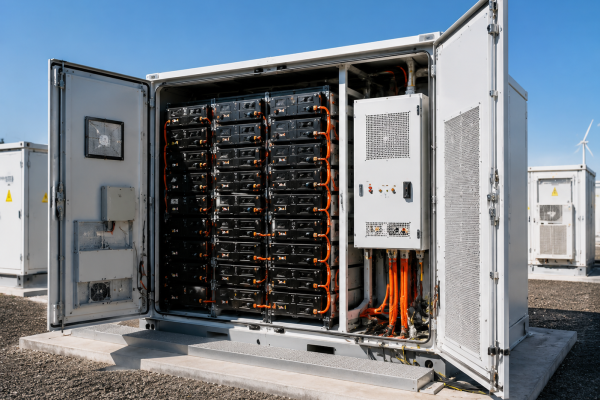
- Ventilated wall-mounted electrical enclosure
Performance After 6 Months:
- Downtime reduced by >75%
- Surge loads stabilized
- System stayed within thermal limits after adding airflow ducts
- Operator plans to replicate this across two new workshops
This example illustrates how small systems provide large operational improvements when engineered correctly.
7. What EPCs Should Standardize Moving Forward
✔ Standard installation checklist
- Cable torque
- Thermal inspection
- EMS communication test
- Load panel labeling
✔ Standard enclosure designs
- Separate compartments
- Forced ventilation
- Cable routing channels
✔ Standard commissioning procedures
- Battery calibration
- SOC drift correction
- Protection setting validation
✔ Standard after-sales monitoring package
- Monthly health report
- Failure early-warning rules
- Remote firmware update
Consistency is key to scaling.
Early deployments of small PV + storage modules show strong market potential—but only when engineering discipline is applied. Thermal design, cabling quality, accurate load characterization, and customer expectation management are the most important factors for long-term reliability.
By standardizing system architecture and installation procedures, EPCs and integrators can deliver highly repeatable, stable, and low-maintenance modular systems across commercial, industrial, and remote sites.